Thimphu is the capital of Bhutan. The city, which is located in the west-central region of the nation, sits at a height of around 7,000 feet (2,000 meters). The government’s formal seat was moved there in 1962 (before, it was wherever the king resided). One of the greatest examples of traditional Bhutanese architecture is the Tashi Chho Dzong (fortress or castle), a medieval walled monastery that has been renovated and expanded to accommodate the royal government’s offices. Terraced fields surround the royal palace, indicating how important agriculture is to the country.
Changangkha Lhakhang
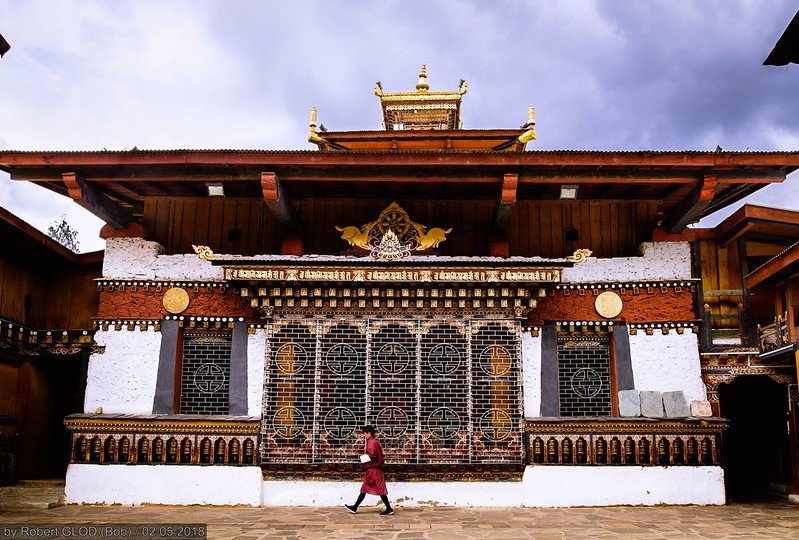
Changangkha Lhakhang is a more than 800-year-old temple in Thimphu that was built in the 12th century and is frequently visited by residents of Thimphu. The Changangkha Lhakhang temple is deeply ingrained in local customs and culture and plays a significant role in the neighborhood. In the outside area of the temple, there are gorgeous prayer bells that are written on in black and gold writing.
It is one of the most beautiful places to visit in Thimphu, and it complements the temple’s beauty with two exquisitely inserted enormous prayer wheels.Locals visit the temple to ask the monks to name their new baby and to obtain the sanctifications of the deity Tamdrin for their children. The temple’s walk, also known as the “back kora,” provides a magnificent perspective of the town’s jumble all around it. When the townspeople go to see the pilgrim, they engage in back kora. At dusk, residents of the town walk in a circle around the temple.
National Folk Heritage Museum
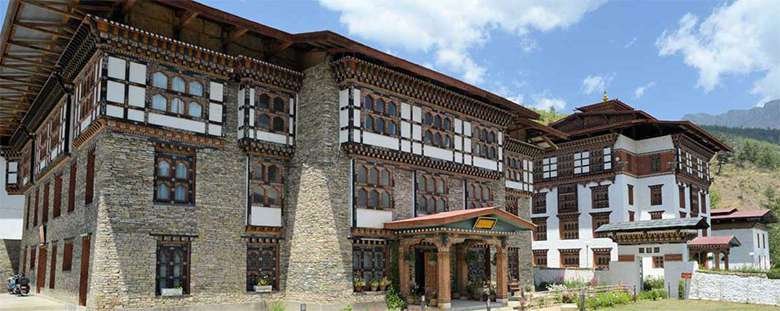
The National Traditional Museum of Bhutan was founded to conserve and present Bhutan’s folk culture. It began as a Queen Mother of Bhutan project in 2001, with the aim of introducing foreigners to Bhutanese rural customs and culture through historical artifacts, educational activities, demonstrations, and documentation. One of the greatest locations to visit in Thimphu is the Museum, which is housed in a 150-year-old building that brilliantly captures the cultural spirit of Bhutan. The National Folk Heritage Museum is the greatest place to start if you truly want to delve into Bhutan’s authentic culture and history since it exquisitely displays and maintains the nation’s long-standing folk practices.
Traditional Bhutanese cuisine, farming implements, household items, and significant traditional trees are all preserved at this one-of-a-kind heritage museum. Some of the most genuine folk components from medieval Bhutan have been wonderfully conserved in the environs of the building where the museum has been built. This museum has done its utmost to preserve Bhutan’s culture, maintaining everything from historically significant flora and animals to genuine Bhutanese hot baths and water mills. When you visit this location, you will also get the opportunity to view real, one-of-a-kind historical Bhutanese furniture, such as chairs, benches, floors, and other items. No other tourist destination can give you a more comprehensive understanding of Bhutanese rural life.
Dechen Phodrang Monastery
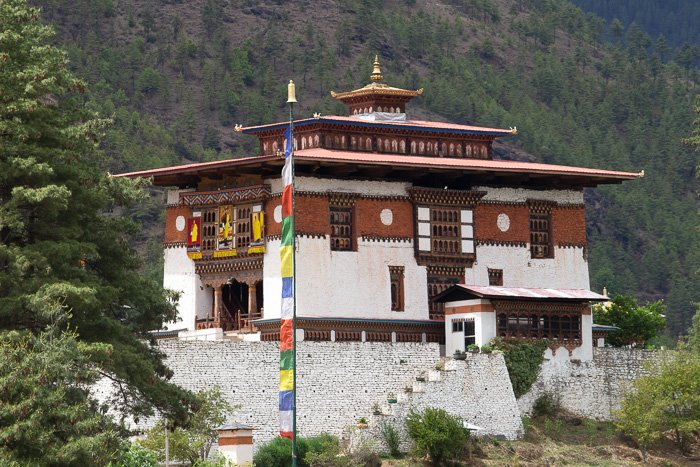
Situated in Thimphu’s northern region. Dechen Phodrang’s name translates to “Palace of Great Bliss.” The monastery is one of the most remarkable locations to see in Thimphu for those with an interest in history and art since it features paintings from the 12th century. A statue of Shabdrung Ngawang Namgyal, widely known as the “Bearded Lama,” is also located at the monastery. Around 300 monks have attended the Dechen Phodrang Monastery’s monastic seminary since 1971.
Motithang Takin Preserve
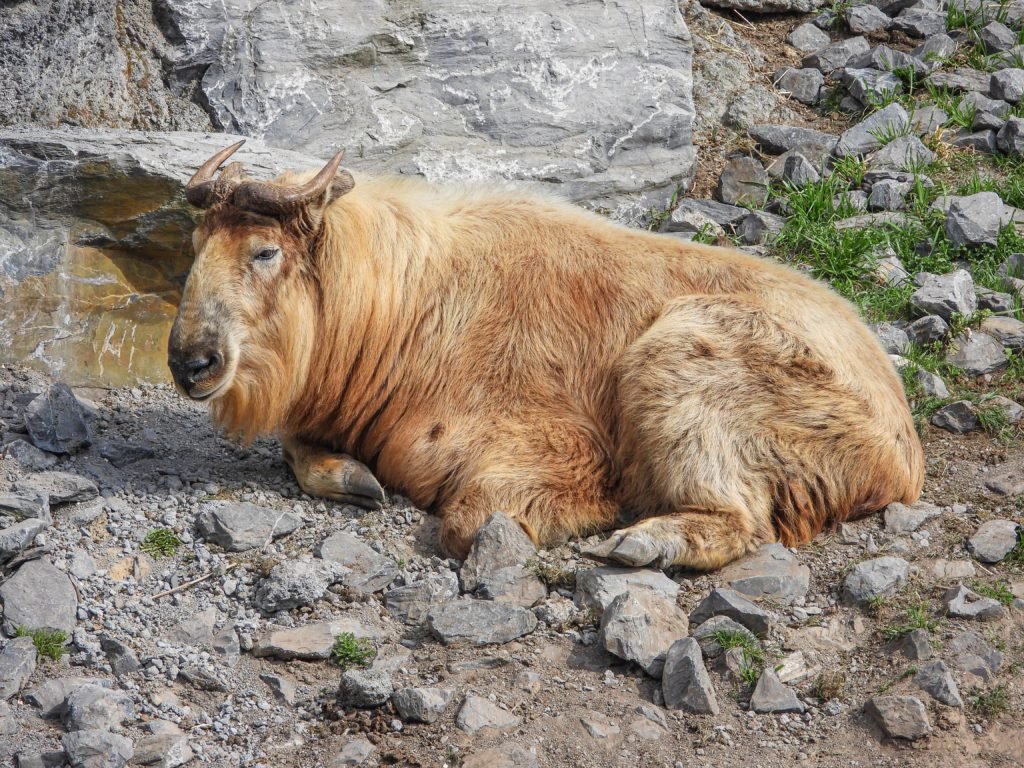
Motithang Takin Preserve is one of the locations to go in Thimphu for animal enthusiasts who wish to observe the varied wildlife of Bhutan. The Motithang Takin Preserve was first designed as a little zoo but was subsequently transformed into an animal preservation facility. Motithang Takin Preserve as it’s name suggests is the home to Takin which is the National animal of Bhutan. The reserve is unique among all the sights to see in Thimphu since it is home to species like the red pandas and the endangered Himalayan serow.
Tashichho Dzong
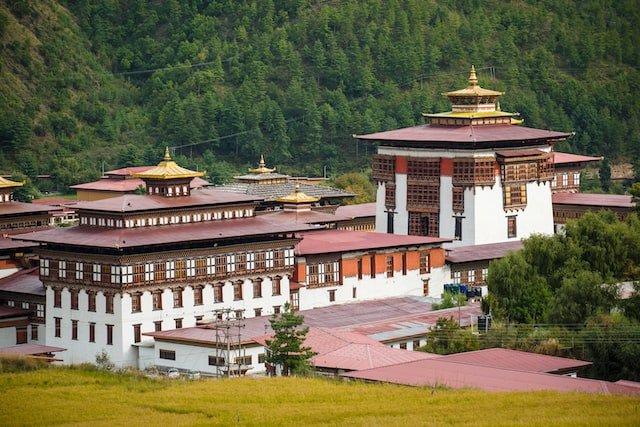
Tashichho Dzong is a stunning Buddhist monastery and castle on the Wang Chu River’s bank in Bhutan’s Thimphu city’s northern suburbs. Every district in the nation is graced with this distinctive architecture, known as a “Dzong” (literally, “fortress” in Bhutanese). The Dzong is one of the most popular attractions not only in Thimphu but the whole country, it is one of the most exquisite dzongs to have graced Bhutan. This ornate building, also known as “Thimphu Dzong,” transports you back in time. It resembles a lovely image from a textbook and is situated next to the Wangchu River. All during the spring, when all the blooms beautify the area, the majestic building is in all its splendor.
A monastery and temple are also located within this tranquil mansion. Currently, it serves as both the main administrative structure and the residence of the Bhutanese government. Other departments’ offices are spread out across the structure. His Holiness, who is also the Chief Abbot of the Religious Body, also spends his summers at the Dzong.
The National Memorial Chorten
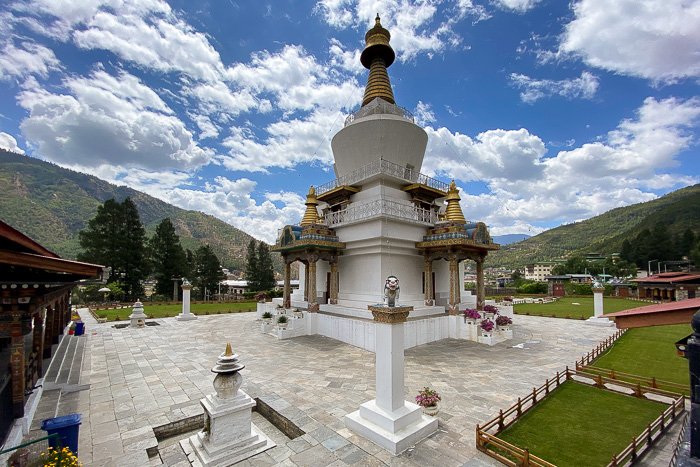
The National Memorial Chorten, which was constructed in honor of Bhutan’s third Druk Gyalpo (Kingdom Head), promotes world peace. One of the nicest locations to view in Thimphu, Bhutan, is the Chorten, which began gaining popularity among the locals when significant Buddhist religious celebrations began being held there. Literally meaning “Seat of Faith,” the word “chorten” has grown to be a significant component of Bhutanese culture. Throughout the day, you may see a variety of Buddhists walking about the chorten.
Due to its architectural design and close ties to Bhutan’s vibrant culture, the Memorial also draws a significant number of tourists from all over the world. It is located conveniently in Thimphu, the country’s capital. The stupa was first constructed in 1974 and underwent a significant refurbishment in 2008. The Chorten is renowned for being “Bhutan’s most conspicuous religious building.” This monument does not contain any human remains, unlike other typical stupas. In the enormous hall on the ground level, there is only one picture of Druk Gyalpo dressed in traditional Bhutanese garb.